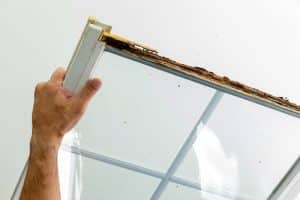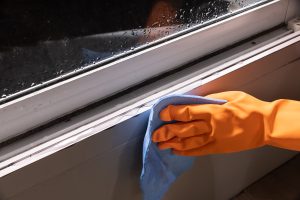

When everything is aligned and functioning properly, casement windows provide one of the tightest seals of any window style. As the window ages, though, certain components can wear down or shift just enough to let cold air or hot air through.
Gasket Wear and Gaps Along the Frame
Casement windows rely on a continuous gasket that compresses when the sash locks into place. Over years of use, that gasket can flatten, harden, or pull away from the frame in small sections. Even a minor gap is enough to let outdoor air move through the perimeter of the sash.
If you feel a draft along one specific section of the window, see light passing through the corners, or notice a visible gap in the gasket, it is likely the seal has deteriorated. These gaps often become more obvious during cold or windy weather because the sash cannot achieve full compression.
If the window is otherwise working properly, there’s no condensation between panes, and the frame has not shifted, a failed gasket can sometimes be replaced. This typically applies when the gasket issue stems from an isolated defect rather than age.
However, gasket failure is far more common in older casement windows that are naturally reaching the end of their service life. In those cases, window replacement is usually the most dependable long-term solution.
Locks That No Longer Create Enough Compression
Casement locks draw the sash tightly into the seal. When the locking mechanism loosens or falls out of alignment, the sash may close but fail to press firmly enough against the gasket to stop drafts.
If the handle feels loose, requires more force than usual, or no longer pulls the sash snugly into the frame, the lock may not be doing its job. You may notice a draft near the lock rail even when the gasket appears intact.
Some casement locks have limited adjustability that allows the keeper or strike plate to be shifted slightly to improve how tightly the sash pulls into the frame. Tightening loose screws may also help if the handle or keeper has begun to wobble.
However, most casement locking mechanisms are not designed for meaningful compression adjustment. If the sash still fails to seal after minor alignment checks, the issue usually stems from hinge movement or frame shift rather than the lock itself. This is another problem often associated with age and regular use, making casement window replacement the most dependable solution.
Hinge Wear or Misalignment That Prevents a Tight Seal
Hinges support the weight of the sash and guide its movement. As they wear, the sash can sag or shift slightly, preventing it from closing squarely into the frame. Even a small amount of misalignment affects compression and allows air to move along the hinge-side or top corner.
Some warning signs of hinge misalignment include rubbing or dragging when the window opens, a top corner that does not pull fully into the frame, or noticeable air movement along the hinge-side seam. In some cases, the sash may appear slightly crooked when fully shut.
Tightening hinge screws or making minor adjustments can sometimes correct the fit. If the hinge is worn out or the sash no longer aligns with the frame, replacing the hinge might be the only reliable alternative to full casement window replacement.
However, hinge replacement typically isn’t a DIY job, and swapping out the hardware won’t restore other aging components to like-new condition.
It’s often best to consult with a window replacement or repair specialist to determine whether a material defect may be involved (in which case the window could still be under warranty) or if the issue is age-related and replacement is the more practical long-term solution.
Air Leaks From Interlocks and Secondary Seals
Some casement designs include interlocks or secondary sealing points that provide extra resistance against wind. When these components wear down or lose alignment, the window may remain operable but no longer block drafts effectively.
Whistling sounds, vibration during storms, inconsistent contact between the sash and frame, and drafts along the meeting points all indicate that the secondary seal is no longer working as intended.
Depending on the design, certain interlock components can be adjusted or replaced. If the frame has shifted or if the sash no longer meets the interlock evenly, window replacement is often the most dependable way to restore performance.
Why Homeowners Choose Window Zone for Casement Window Replacement
Window Zone installs custom-made casement windows that can stand up to North Texas weather, with durable hardware, reinforced frames, and insulating glass that provides years of dependable performance.
Our certified installation teams ensure proper sash alignment, clean closure, and reliable compression sealing. Every installation is backed by a lifetime transferable warranty that covers frames, glass, hardware, and labor.
Industry-leading warranties also mean that you can trust our experts to fix defective components if they ever compromise the operation of your casement window.
Find Out if Your Casement Windows Can Be Repaired or if Replacement is the Best Option
If your casement windows are leaking air or no longer closing tightly, Window Zone can identify the cause and recommend the right solution. Call (469) 557-6333 to schedule your free consultation.