Patio doors are exposed to more stress than most other openings in a home. They face wind-driven rain, intense sun exposure, and daily sliding movement. Over time, small changes in alignment, sealing, or drainage can lead to noticeable drafts or moisture near the threshold.
Water collecting in the exterior track during heavy rain is normal, but moisture should not reach interior flooring.
Water intrusion and drafts typically don’t start all at once unless there’s a specific damaging event or the patio door was improperly installed. In most cases, these issues are caused by gradual changes that worsen as the patio door gets older.
How Patio Door Drainage Systems Are Designed to Work
Most sliding patio doors are built with an exterior track that acts as a drainage channel. During heavy rain or wind-driven storms, water can enter this outer portion of the track. Small weep holes located along the bottom exterior edge of the frame allow that water to drain out of the track without reaching the interior side of the threshold.
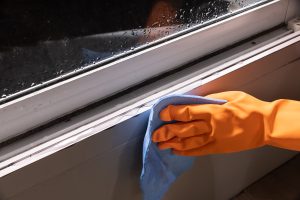
If water does begin collecting on the interior side of the track, it is often because those weep holes are clogged with dirt, debris, or insect buildup.
This is one issue that typically does not require patio door replacement or professional repair. Most homeowners can clear minor blockages themselves by locating the small openings along the exterior bottom frame and gently removing debris so water can drain properly again.
Hinged patio doors, like French doors, rely on a sloped exterior sill, compression weatherstripping, and concealed sill flashing to shed water downward and direct moisture away from the door.
When Water in a Sliding Patio Door Track Signals a Problem
Water becomes a concern when it stops draining effectively or moves beyond the outer channel. If blocked or clogged weep holes aren’t the cause, the problem may be:
- Improper threshold pitch
- Deteriorated sill components
- Frame movement that alters drainage angles
- Seal failure along the lower frame or sill assembly
What Causes Drafts Around Patio Doors
Patio doors rely on weatherstripping and perimeter seals to limit air movement when closed. Unlike fixed windows, they must be able to slide or swing freely while still sealing tightly against the frame.
Drafts often result from:
- Worn or flattened weatherstripping
- Slight panel misalignment
- Frame expansion and contraction
- Air gaps forming at corners or meeting rails
In sliding doors, roller wear or track movement can prevent the panel from compressing evenly against the seals. In hinged doors, compression seals can lose elasticity or the door can settle slightly in the frame, reducing contact pressure.
Because patio doors include moving components, sealing materials naturally experience more wear than fixed window units. Over time, even small alignment changes can allow noticeable air movement near the threshold or vertical frame edges.
How Roller and Track Wear Affect Sealing
Rollers in sliding doors play a critical role in keeping the door panel level within the frame. The panel may begin sitting unevenly if rollers flatten, corrode, or wear down. Even a small change in alignment can reduce compression along the vertical seals.
When the door no longer sits square in the frame, gaps can form that allow both air and water intrusion. In many cases, homeowners notice increased drafts first, followed by moisture intrusion during heavier storms.
Should You Repair or Replace Your Patio Door
Minor issues such as debris in the track or temporarily blocked drainage may be straightforward to address. However, recurring water intrusion, consistent drafts, visible frame movement, or multiple symptoms occurring together often indicate aging components rather than a single adjustment issue.
Today’s patio doors are designed with:
- Stronger sill systems
- Improved water management channels
- More durable weatherstripping
- Multi-point locking systems that create more consistent compression when closed
- Better sliding door roller systems that support long-term alignment
Damage, defects, and age are the most important variables to consider when deciding between replacement and repair. Doors that are more than 15 to 20 years old, poorly installed, or damaged are more likely to have recurring problems.
If the door is relatively new and a targeted fix will restore functionality and prevent drafts and water intrusion for another five or 10 years, repair might be the more cost-effective approach.
If you’ve decided to replace your patio door, call Window Zone at (469) 557-6333 to schedule a free consultation and explore modern patio door options designed for North Texas conditions.